
Research
Rooted in Community: Unearthing the Impacts of Soil Heavy Metal Contamination in Urban Gardens and Implications for Environmental Justice
Dissertation: Alexis M. Wilson, PhD
-
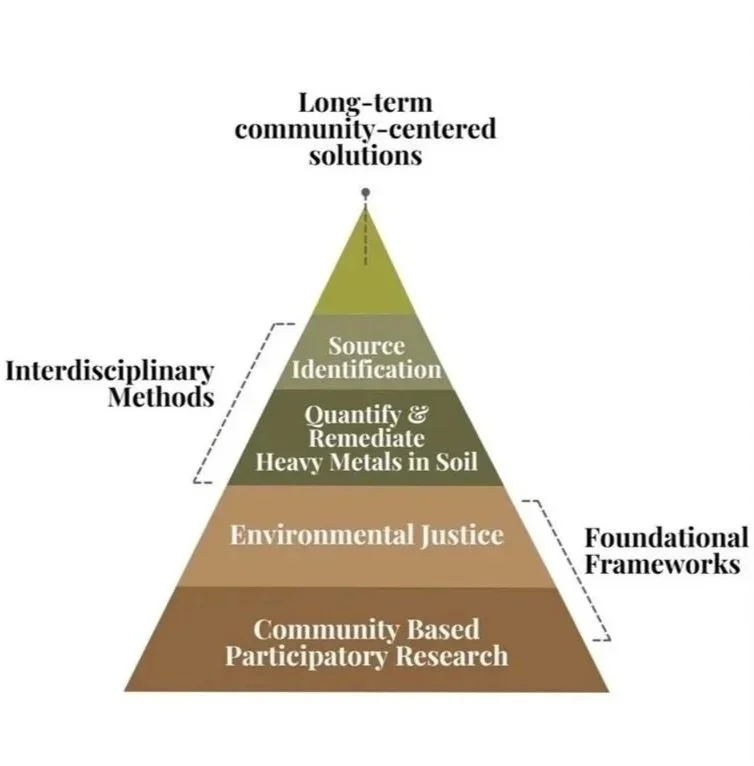
Urban gardens are crucial for promoting community resilience, increasing access to natural spaces, and combating food insecurity. However, urban gardens also have the potential to expose people to toxic heavy metals, especially lead, through soil contaminated by human activities. Decades of Environmental Justice scholarship and activism undeniably conclude that communities of color and low-income communities are disproportionately burdened by food insecurity and exposure to environmental pollution. Since measurements of heavy metal concentrations in urban garden soil remain limited, this dissertation uses an interdisciplinary approach that integrates soil biogeochemical analyses, qualitative data collection, Environmental Justice principles, and Community Based Participatory Research, to address this pressing public health concern.
Conceptual diagram of the frameworks, methods, and goals of Dr. Wilson’s dissertation.
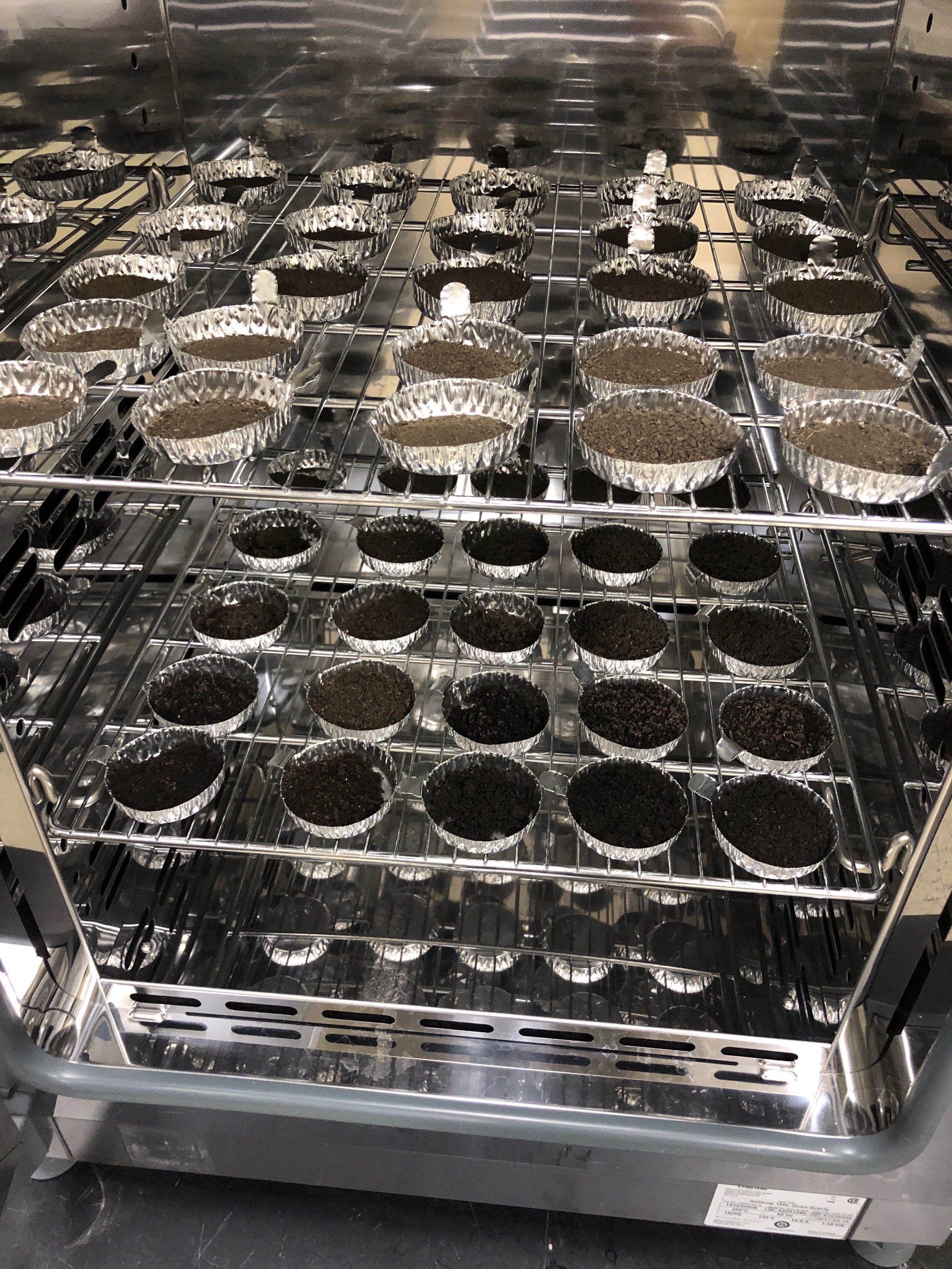
Dr. Wilson’s soil samples drying in an oven at Stanford University before analysis.
The Crucial Role of Soil Testing and Information Accessibility in Shaping Urban Gardener’s Perspectives and Behaviors
Alexis M. Wilson, Christopher B. Field, Scott Fendorf
-
Employing a mixed methods approach, combining qualitative interviews and quantitative chemical analyses, we investigated the perspectives of home and community gardeners in Palo Alto and East Palo Alto, California. Soil lead contamination was found in 28% of the gardens tested, including raised garden beds, which are typically regarded as the solution for reducing exposure to soil lead and other contaminants. The findings from the interviews underscore the transformative impact of soil testing on gardeners' perceptions, behaviors, and decision-making processes. This study highlights the significant need for access to soil testing and information for urban gardeners to reduce exposure to lead, a nationwide public health issue.
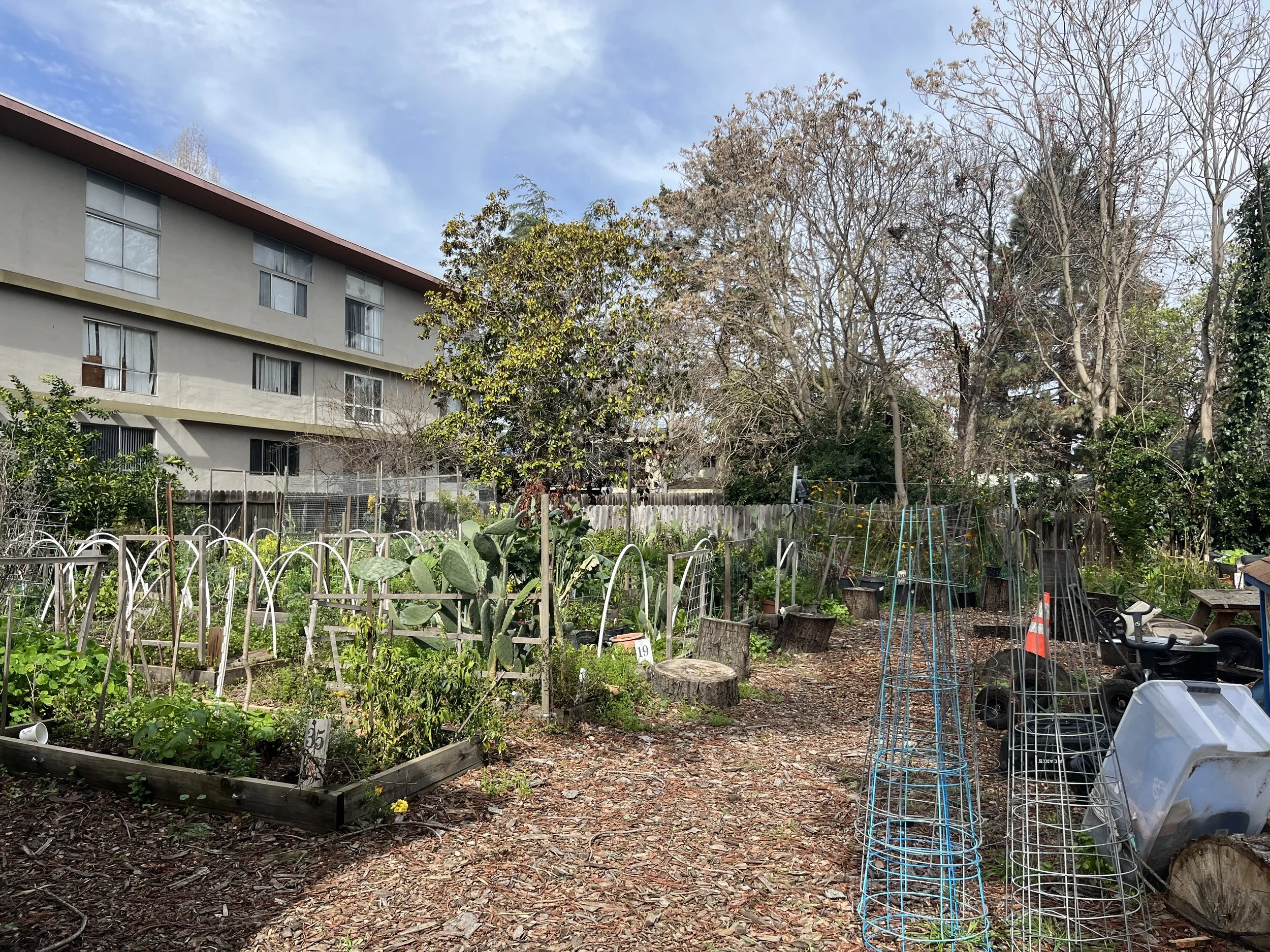

Fresh Approach Collective Roots Community Garden in East Palo Alto, CA where soil samples were collected and later analyzed.
Flyer used to recruit participants for this study posted around the community.
A Collaborative Approach to Addressing Heavy Metal Contamination in Urban School Garden Soils: A study in Oakland, California
Alexis M. Wilson, Christopher B. Field, Scott Fendorf
-
Exposure to heavy metals in school gardens can occur by gardening in contaminated soil. Using a community-based research approach, we assessed soil contamination at 14 school campuses in East Oakland, California, a historically disadvantaged community. We measured concentrations of heavy metals in over 700 soil samples from school gardens. Only lead posed a risk to the community, with elevated levels in half the school sites assessed. Our findings illustrate that urban school gardens can be lead exposure pathways, and access to soil testing is needed to ensure safe usage of urban gardens. The source of Pb was most likely the import of contaminated soil to gardens. Our findings led to new OUSD administrative regulations regarding soil import practices for school gardens and identified a need for additional soil testing in the remaining school districts.


Undergraduate mentee Cali O., Dr. Wilson, and undergraduate mentee Rachel I. collecting soil samples at a school garden in Oakland, CA.
Dr. Wilson holding soil samples collected at a school garden in Oakland, CA.
Don’t Take Soil from Strangers: Soil Given Away Online Poses a Risk of Introducing Heavy Metals to Urban Gardens
Alexis M. Wilson, Christopher B. Field, Scott Fendorf
-
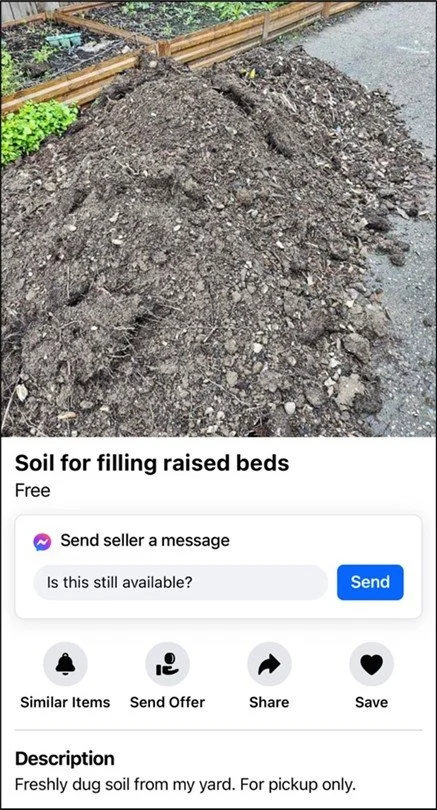
Secondary sources of soil, including consumer products, compost amendments, and soils advertised through online platforms like Facebook Marketplace., may be contaminated with heavy metals. Through soil sampling and analysis across the San Francisco Bay Area, this study examined the extent of heavy metal contamination in secondary sources of soil. While consumer products and compost amendments were generally low in lead, free soils contained lead concentrations up to 21 times soil screening levels set by the California Department of Toxic Substances Control. These findings highlight the significant environmental and public health risks associated with informal soil exchanges facilitated online. Furthermore, this study explores the environmental justice implications of heavy metal contamination in secondary sources.
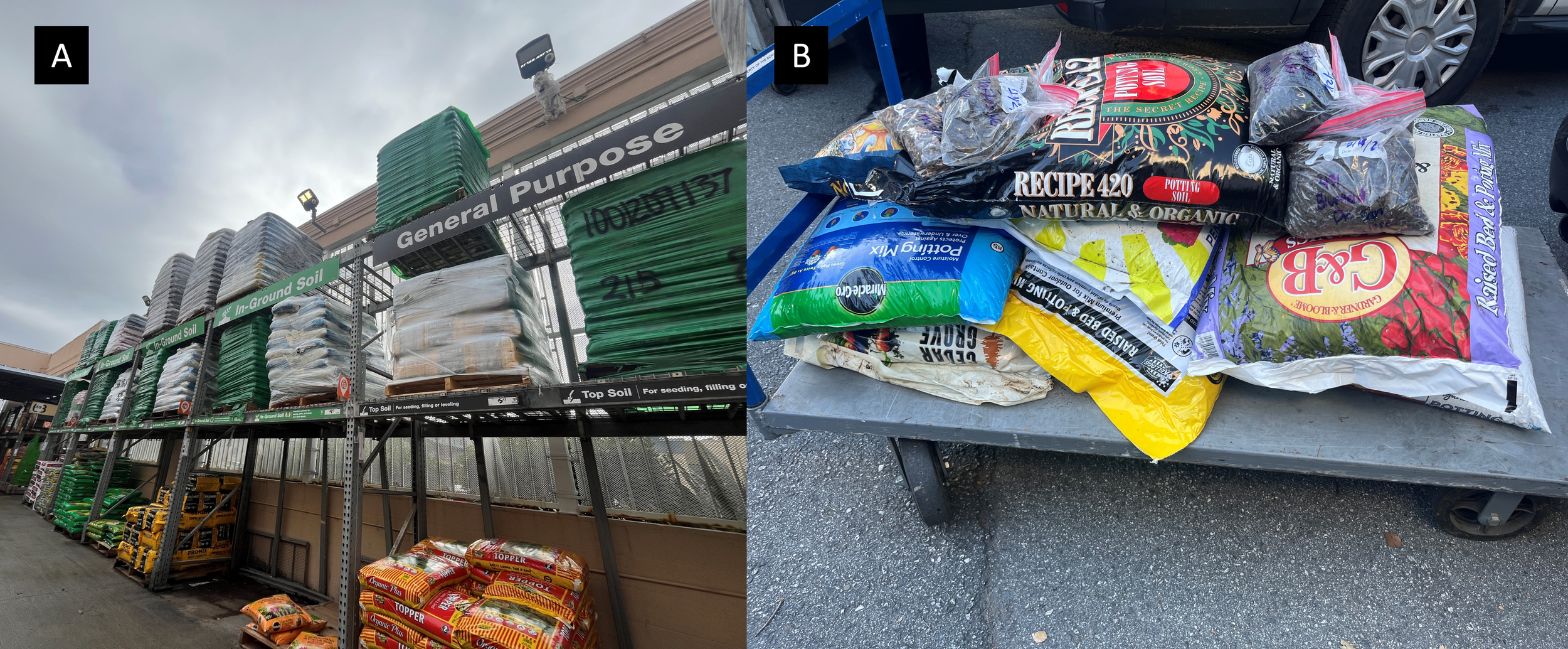
Consumer potting soil products purchased at major retailers and local nurseries for analysis.
Example of Facebook Marketplace advertisement for free soil.
Towards Environmental Justice: A Novel Framework and Strategic Approaches for Implementing Community Based Participatory Research in the Earth and Environmental Sciences
Alexis M. Wilson, Emily Polk, Christopher B. Field, Scott Fendorf
-
Summary: Community Based Participatory Research (CBPR) is an approach to research that equitably involves community members, academic researchers, and stakeholders in all aspects of the research process. We provide a case study of a successful long-term project in East Oakland, California. To encourage adoption of the CBPR approach, we provide eight strategies employed to foster meaningful collaboration between scientists and community members. Furthermore, the study introduces a novel framework, C.I.R.C.L.E, which outlines the core principles needed to build and sustain strong community partnerships and successfully implement CBPR in research.
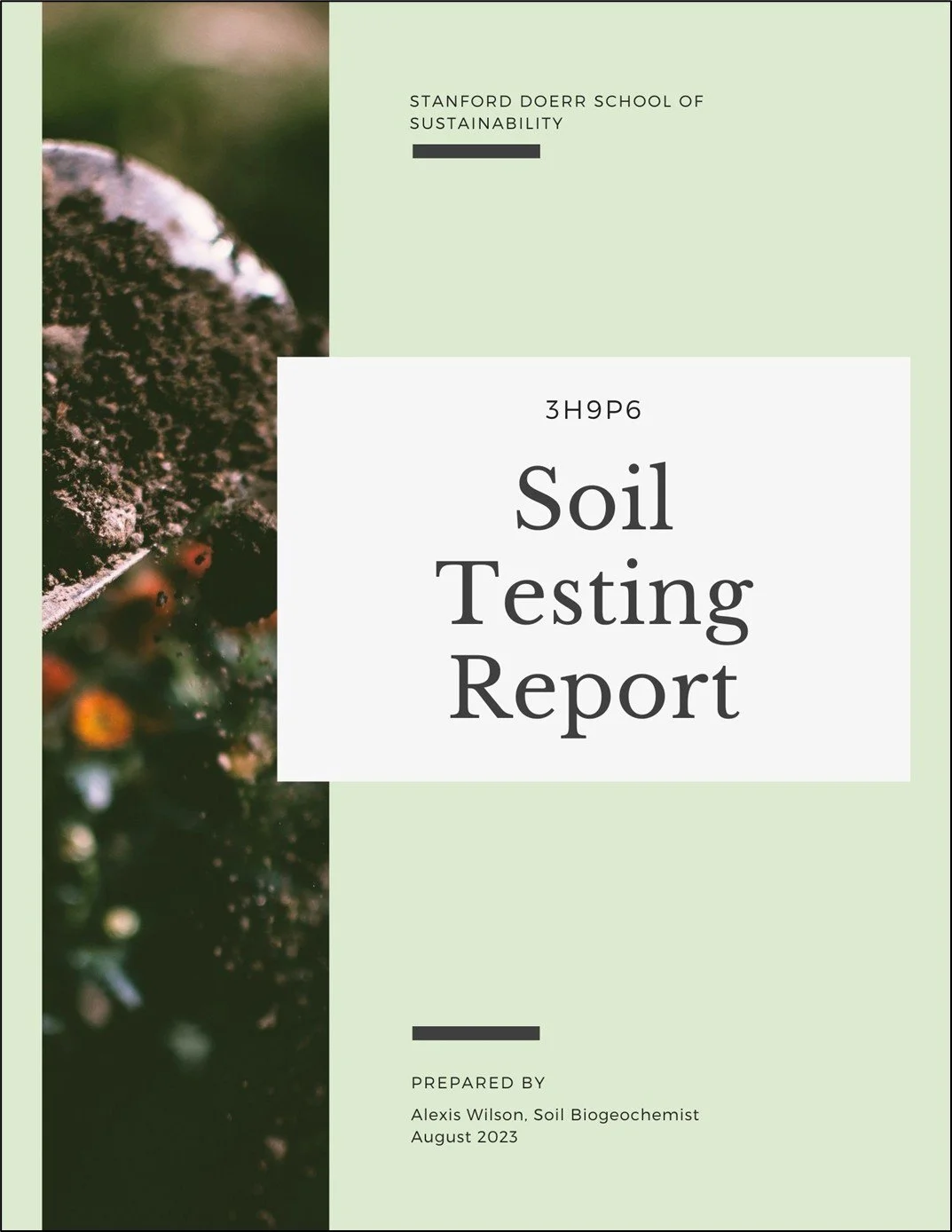

Cover of soil testing report developed by Dr. Wilson and given to all study participants with their results.
Graphic developed by Dr. Wilson describing the CIRCLE framework.
Litter quality and decomposition responses to drought in a northeastern US deciduous forest
Senior Honors Thesis, Cornell University, Alexis M. Wilson, James C. Burtis, Marc Goebel, Joseph B. Yavitt
-
Even though drought impacts on tree physiology have been identified, whether drought affects leaf litter chemistry that, in turn, influences litter decay rates is still poorly understood. We compared litter quality and decomposition for two cohorts of leaves from five deciduous tree species. One cohort experienced a growing-season drought, and the other cohort came from the same trees in the ensuing, post-drought growing season. Leaf litter decay rates for the drought cohort were related to litter nitrogen and lignin concentrations, whereas decay rates for the post-drought cohort were related to litter carbohydrate concentrations. Our findings suggest that the role of drought events on seasonally deciduous forest ecosystems must recognize species-specific responses in leaf litter quality and decomposition.


Dr. Wilson with research advisor Dr. Joseph Yavitt at the poster presentation of her senior honors thesis at Cornell University.
Dr. Wilson collecting samples at a field site in Ithaca, NY for the decomposition study.
Examining the Relationship between Edaphic Variables and the Root System of Abies concolor in the southern Sierra Nevada
Summer Undergraduate Research in Geoscience and Engineering Program (SURGE), Stanford University, Alexis M. Wilson Robert B. Jackson, Shersingh Tumber-Davila
-
The purpose of this research was to understand the potential impact of drought and climate-induced stress on forest systems, particularly tree mortality in the southern Sierra Nevada. We examined environmental factors that may contribute to root zone variability and belowground biomass investment by individual plants, which may impact their ability to adapt to water stress. In the Sierra-Nevada Mountains we collected soil and root samples through extensive coring, which were analyzed back in the lab. Including but not limited to, soil texture, water holding capacity, pH, root biomass, etc. This project was conducted through the SURGE program at Stanford University where Dr. Wilson was advised and mentored by Dr. Robert B. Jackson and Dr. Shersingh Tumber-Davila.
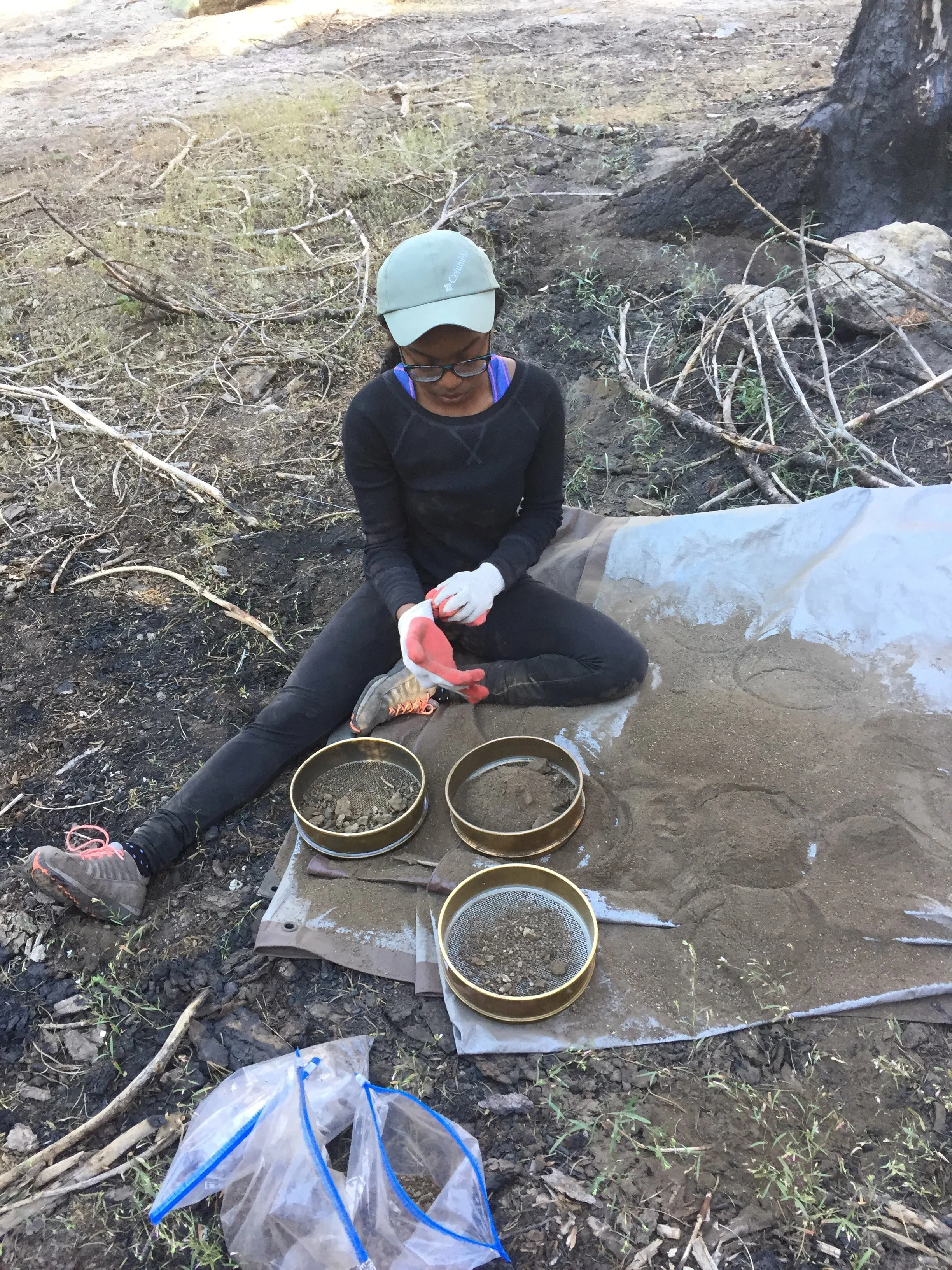

Dr. Wilson collecting soil samples in the southern Sierra Nevada for the SURGE program.
Dr. Wilson presenting the final poster presentation for the SURGE program.
The Other Side of Science: How Renewable Energy Development is Perpetuating Environmental Injustice
SIT World Learning, International Honors Program, Climate Change: The Politics of Food, Water, and Energy in Vietnam, Morocco, & Bolivia, 2018
-
The purpose of this research was to examine how renewable energy development in Vietnam and Morocco perpetuated environmental injustice. We utilized theoretical frameworks, qualitative and quantitative data collected through interviews and literature reviews, drawing on both theory and lived experiences. This was a group project conducted with other study abroad students; Dr. Wilson’s portion focused on two case studies, the Dak Mi 4 hydropower plant in Vietnam and the Noor Ouarzazate 1 solar power plant in Morocco.
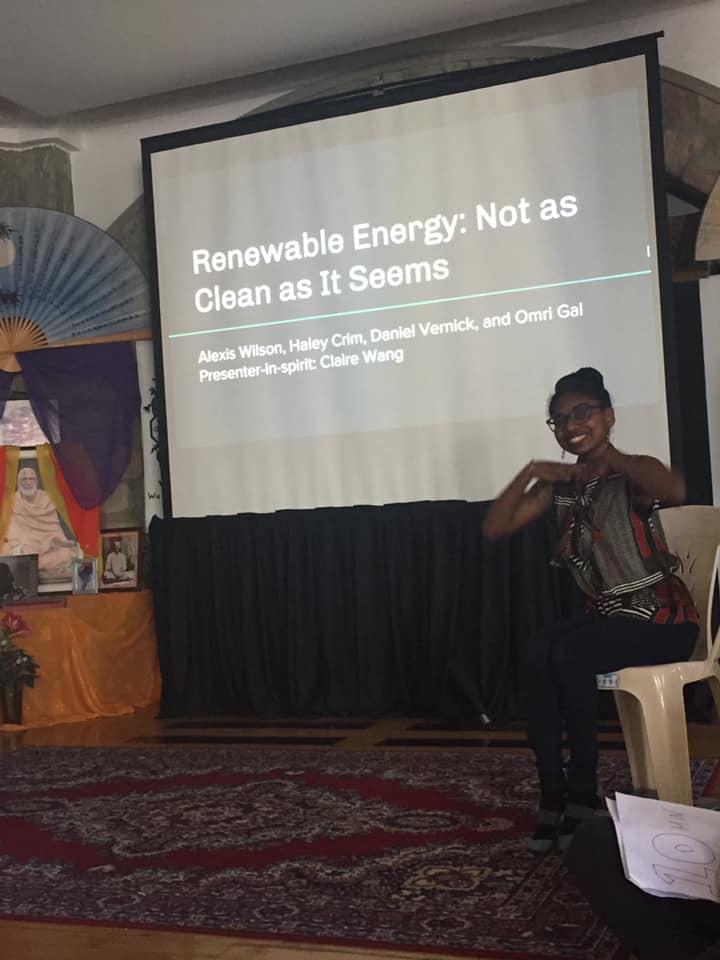

Dr. Wilson presenting her research at the conclusion of the study abroad program.
View from the Dak Mi 4 Hydropower Plant in Vietnam
Examining the Relationship Between Sediment Grain Size and Toxic Arsenic Levels in the Ganges-Brahmaputra Delta in Bangladesh
Leadership Alliance Summer Research-Early Identification Program, Vanderbilt University, Alexis M. Wilson, Steven L. Goodbred, Jessica Raff.
-
The Ganges-Brahmaputra Delta supports one of the world’s most densely populated areas. However, arsenic is heterogeneously distributed across the landscape, contaminating groundwater used by over 100 million people in Bangladesh. The purpose of this research was to understand factors which contribute to the distribution and range of Arsenic levels found in groundwater. This research focused on sediment grain size as a possible explanation. This project was conducted through the Leadership Alliance program at Vanderbilt University where Dr. Wilson was advised and mentored by Dr. Steven Goodbred and Dr. Jessica Raff.
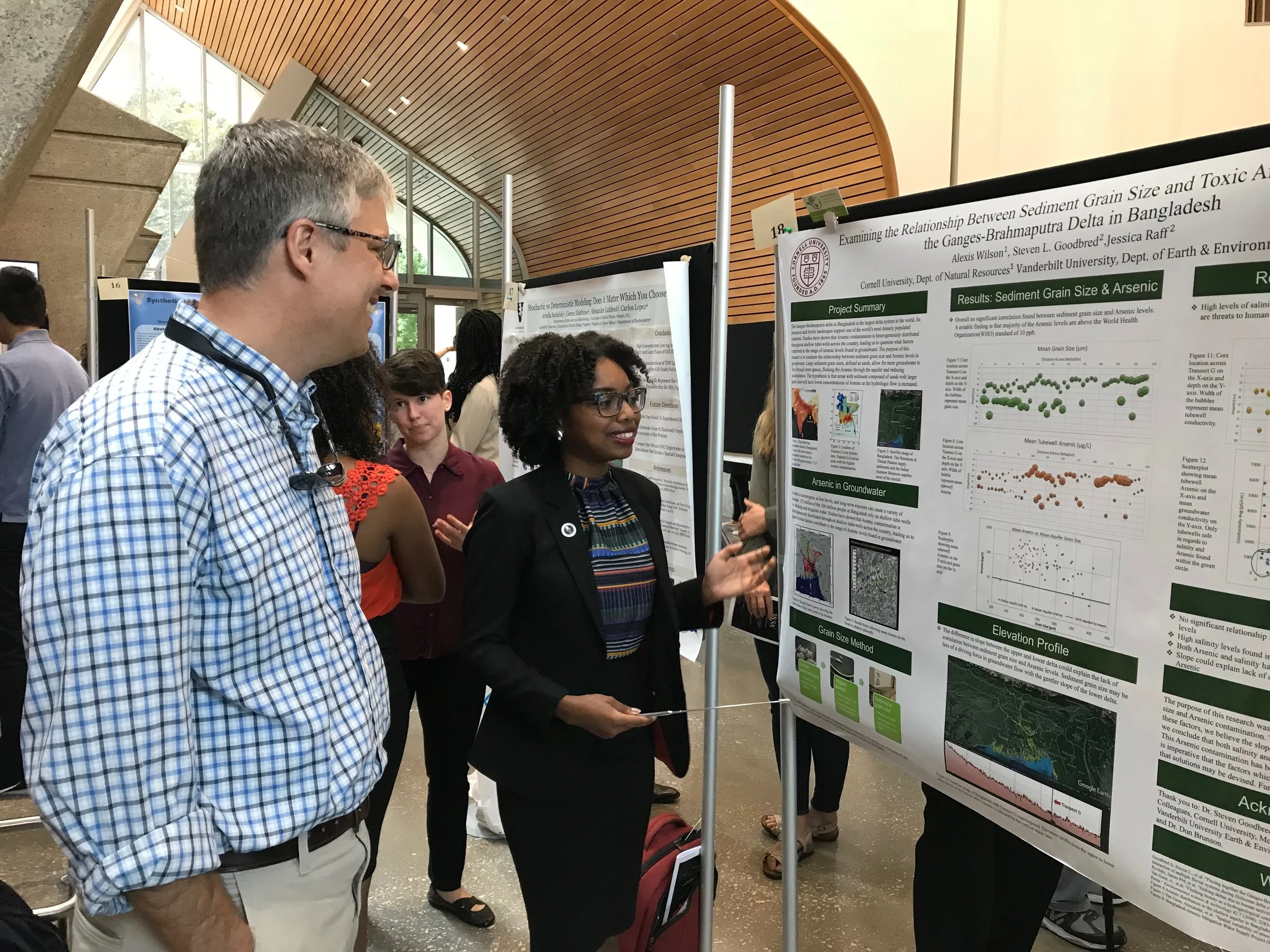

Dr. Wilson presenting her research at the conclusion of the Leadership Alliance program to mentor Dr. Steven Goodbred.
Dr. Wilson in Bangladesh during a sample collection trip.